Guide To Choose The Best Pigeon Net
What is a Pigeon Net?
A pigeon net is a protective net installed on balconies, terraces, windows, and other open spaces to stop pigeons and similar birds from entering. Pigeons often leave droppings, build nests, create noise, and make balconies dirty. A pigeon net works as a barrier that helps keep these spaces clean and comfortable.
A good pigeon net prevents pigeons from roosting or nesting in places where you do not want them. It also helps reduce cleaning effort, droppings, stains, and disturbance.
Most pigeon nets are made from strong materials such as HDPE or nylon. The net should be strong enough for outdoor use, but still allow air, light, and visibility. For pigeon control, commonly used mesh sizes include 25mm, 35mm, and 50mm depending on the space and bird problem.
Buy pigeon nets here:
https://netskart.com/product-tag/pigeon-net
Different Materials of Pigeon Net and Why to Choose Them
Choosing the right material is very important when buying a pigeon net for your balcony or window. Two common materials used for pigeon nets are nylon and HDPE.
Nylon Pigeon Net
1. Strength and Durability
Nylon pigeon nets are strong and long-lasting. They can handle regular bird activity and outdoor conditions when installed properly. Nylon nets are useful for balconies, windows, and other areas where stronger protection is needed.
2. UV Resistance
Good-quality nylon nets can be UV-treated to handle sunlight better. This is important for outdoor spaces like balconies and windows that receive direct sun exposure.
3. Flexibility
Nylon is flexible, which makes it easier to install in different spaces. It can fit balconies, windows, and irregular areas more easily.
4. Aesthetic Appeal
Nylon pigeon nets are available in different looks and can blend well with many balcony designs. A neat installation helps keep the balcony protected without spoiling its appearance.
Measure Your Place and Find the Perfect Size of Pigeon Net
The pigeon net size should be selected properly so it fits the area and keeps pigeons out effectively. Whether you need a pigeon net for a balcony or window, accurate measurement is important.
Simple Guide to How To Measure Your Area
Gather Your Tools:
Measuring tape
Notepad and pen
Ladder, if required
Measure the Balcony
Measure the height from the floor to the ceiling or top fixing point.
Measure the width from one side of the balcony to the other.
Measure the depth from the wall to the outer railing or edge, if needed.
Measure the Windows
Measure the height from the lower window frame to the upper frame.
Measure the width from one side of the window frame to the other.
Accurate measurement ensures the pigeon net covers the full area without leaving gaps. A properly fitted pigeon net gives better protection and looks cleaner after installation.
Advantages of Purchasing Custom Pigeon Nets
Perfect Fit: Custom-size pigeon nets reduce gaps where pigeons can enter.
Effective Protection: A well-fitted net gives better bird control.
Better Appearance: A properly fitted net looks cleaner and more professional.
Easy Installation: Custom nets are easier to install because they match the space more closely.
Netskart offers pigeon nets for different balcony and window requirements, with options suitable for custom-size needs.
Customised Pigeon Nets at Netskart
Standard-size pigeon nets are available in the market, but many balconies and windows require custom sizing. At Netskart, customers can choose pigeon nets according to their space and requirement.
Whether you need a pigeon net for a balcony, window, terrace, or other open area, choosing the right size helps reduce wastage and improves protection.
Explore bird nets here:
https://netskart.com/product-category/bird-net
Pigeon Net Made from HDPE
1. Lightweight and Strong
HDPE pigeon nets are lightweight but strong. They are easy to handle and suitable for balcony and window protection without adding unnecessary weight.
2. Weather Resistance
HDPE nets are suitable for outdoor use because they can handle different weather conditions. They are commonly used for balconies and windows where sunlight, wind, and rain exposure may happen.
3. Chemical Resistance
HDPE has good resistance to many cleaning solutions and pollutants. This helps the net last longer when maintained properly.
4. Cost-Effective
HDPE pigeon nets are usually more economical and give good value for money. They are a practical choice for customers looking for effective pigeon control at a reasonable price.
Difference Between Nylon and HDPE Pigeon Nets
Durability and Strength
Nylon nets are strong and flexible, making them useful for areas with more bird activity. HDPE nets are also strong, but they are lighter and more budget-friendly.
Weather Resistance
HDPE performs well in outdoor conditions and is resistant to water and many chemicals. Nylon is also strong and useful where flexibility is required.
Ease of Installation
Nylon is flexible and can fit different spaces easily. HDPE is lightweight and easy to handle, which makes installation simpler.
Aesthetic Considerations
Nylon nets may offer more finish and colour options. HDPE nets usually have a clean and practical appearance.
Cost
HDPE nets are generally more economical, while nylon nets may cost more but offer good strength and flexibility.
Why Choose Nylon Pigeon Nets?
Strong and suitable for areas with more bird activity.
Useful for outdoor spaces when UV-treated.
Flexible and easy to install in different shapes.
Available in options that can match the surrounding area.
Why Choose HDPE Pigeon Nets?
Lightweight and easy to handle.
Suitable for balconies, windows, and outdoor spaces.
Weather-resistant and practical for regular use.
Affordable and good value for money.
How to Select the Best Bird Net Mesh Size
Mesh size is one of the most important factors when choosing a pigeon net. Mesh size refers to the gap between the net threads.
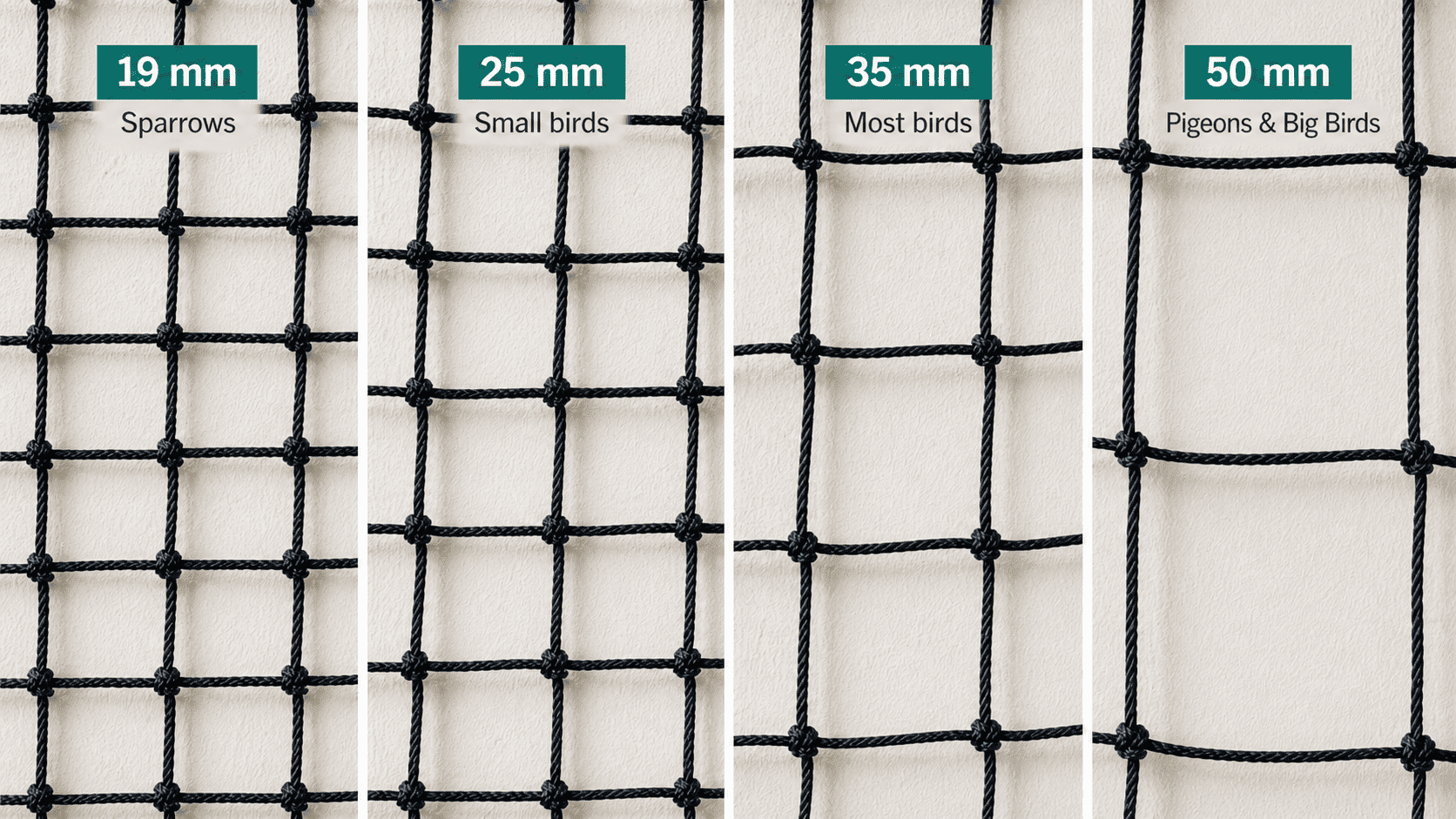
The right mesh size should stop pigeons from entering while still allowing air, light, and visibility. For pigeon nets, 25mm is commonly used, while 35mm and 50mm options are also available depending on the requirement.
Choosing the Right Mesh Size
For Balconies
For balcony pigeon nets, 25mm mesh is commonly used because it helps stop pigeons while allowing airflow and visibility. If smaller birds are also a problem, a smaller mesh option can be considered.
For Windows
For windows, 25mm mesh is also a practical choice. It helps stop pigeons without blocking the outside view too much.
For Gardens and Open Spaces
For gardens and open spaces, the mesh size depends on the type of birds and the area being protected. Smaller mesh sizes are useful for smaller birds, while larger mesh sizes may be suitable for wider open-area protection.
Standard Mesh Sizes
25mm Mesh Size: Commonly used for pigeon nets on balconies and windows.
35mm Mesh Size: Suitable for medium bird-control requirements.
50mm Mesh Size: Used where larger mesh coverage is acceptable and airflow is important.
Key Points to Remember
Material Choice:
Nylon Pigeon Nets: Strong, flexible, and useful for long-term balcony or window protection.
HDPE Pigeon Nets: Lightweight, weather-resistant, and cost-effective for regular use.
Mesh Size Selection:
25mm mesh is commonly used for pigeon control.
35mm and 50mm options may be selected depending on the space and bird problem.
Customised Solutions at Netskart
If you need pigeon nets for a balcony, window, terrace, or open space, Netskart offers multiple options according to size, material, mesh, and budget.
Useful links:
Conclusion
Choosing the right pigeon net is important for keeping balconies, windows, and open spaces clean and protected from pigeons. The best pigeon net depends on your space, material preference, mesh size, durability requirement, and budget.
Nylon pigeon nets are strong and flexible, while HDPE pigeon nets are lightweight, weather-resistant, and economical. Choosing the correct mesh size and measuring the area properly helps ensure better coverage and long-term protection.
With the right pigeon net from Netskart, you can keep your balcony or window area cleaner, safer, and more comfortable.