Master the Art of Bird Netting: Key Dos and Don’ts for a Flawless Setup
Why You Should Install Bird or Pigeon Netting on Your Balcony?
Bird netting is a practical solution for preventing birds from entering balconies, windows, and other open spaces. Birds can leave droppings, feathers, nesting waste, and dirt around the home, which nobody wants to clean repeatedly.
When installed properly, bird netting works like a protective barrier that keeps birds away from the covered area without harming them. It helps keep your balcony, windows, and nearby spaces cleaner and easier to maintain.
Buy bird nets here:
https://netskart.com/product-category/bird-net
Benefits of Installing Bird Netting
The first advantage of bird netting is that it is humane and safe for birds. Some bird-control methods may harm or disturb birds, but bird netting simply creates a barrier that birds cannot cross.
This makes it a good choice because it is effective, simple, and does not harm the environment when installed correctly.
Dos of Bird/Pigeon Net Installation
1. Research the Types of Bird Nettings
Before installing bird netting, understand the different types available. Bird nets come in different materials, mesh sizes, colours, and strength levels.
Some nets are better for pigeons, while others are suitable for smaller birds. Understanding these differences helps you choose the right net for your space.
Pigeon net options:
https://netskart.com/product-tag/pigeon-net
2. Provide Inside Access During Installation
Make sure you can still access important areas after installation. If you have plants, AC units, pipes, or items outside the net, plan the net placement properly.
Proper planning helps you maintain your balcony without needing to remove or damage the net later.
3. Be Neat and Avoid Entanglements
During installation, keep the net neat and untangled. Keep all tools and materials ready before starting the work.
It is better to have another person help you stretch and fix the net properly. This makes the installation cleaner and reduces mistakes.
Don’ts of Anti-Bird Net Installation
1. Avoid Installation on Windy Days
Do not install bird nets on very windy days. Bird nets are lightweight and flexible, so they can get tangled or become difficult to fix properly in strong wind.
Choose a calm day so the net can be stretched, aligned, and fixed securely.
2. Do Not Think All Bird Nettings Are Created Equal
Not all bird nets are the same. Different nets are made for different birds, spaces, and usage conditions.
Before buying, identify the type of bird problem and choose the correct mesh size and material. This gives better protection and longer-lasting results.
3. Do Not Expect Zero Maintenance
Bird netting is a long-term solution, but it still needs checking and basic maintenance. Over time, the net may become loose, collect dust, or get damaged due to weather or regular use.
Regular inspection and timely repair help keep the net effective for a longer period.
Key Considerations for Bird Net Installation
1. Identify Target Areas
First, identify where birds are entering, sitting, or nesting. Look for signs such as droppings, feathers, nests, and regular bird movement.
Common target areas include balconies, ledges, roof lines, window grills, ducts, and terrace corners. Covering these areas properly gives better results.
2. Select an Appropriate Mesh Size
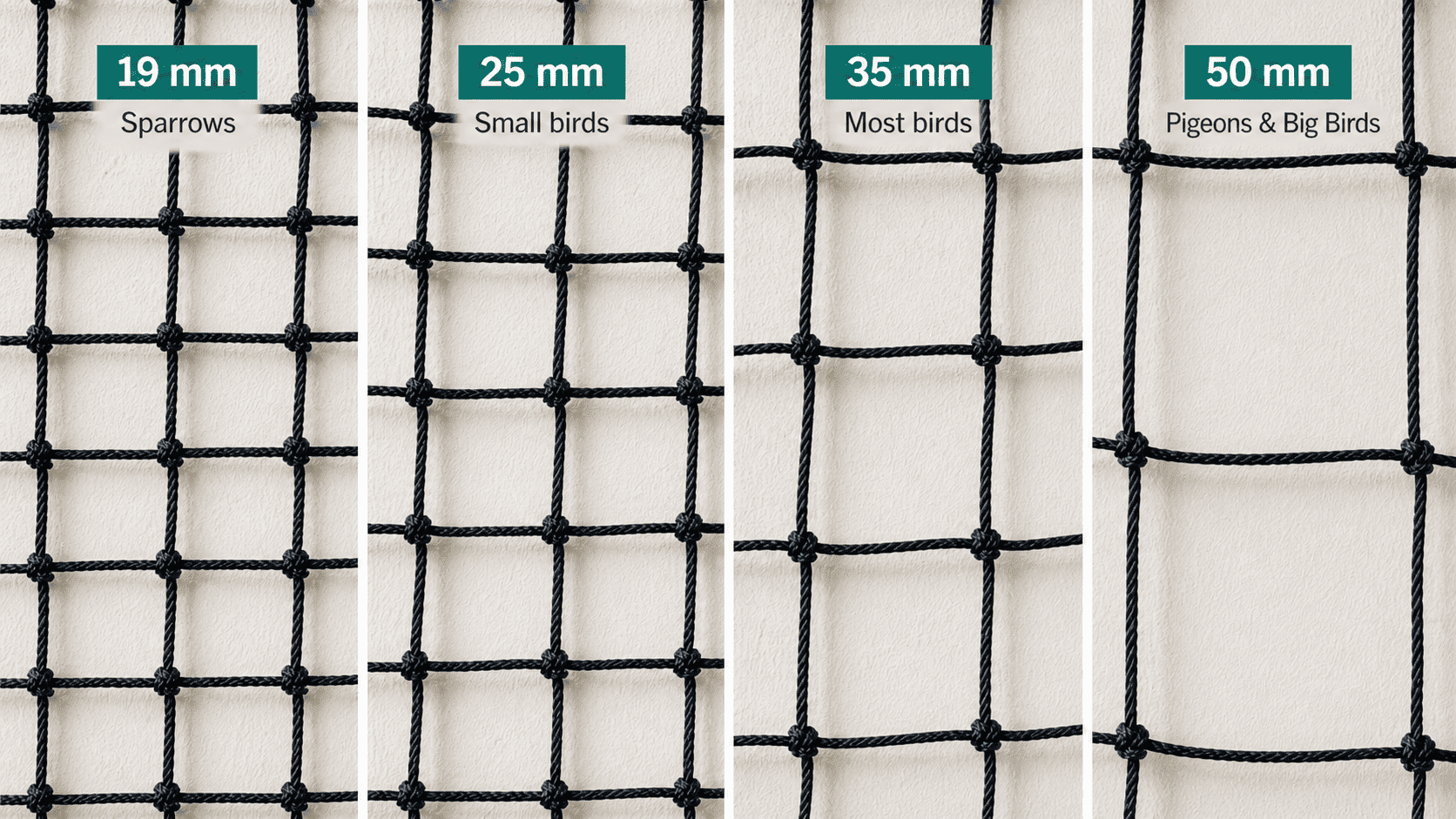
Choosing the correct mesh size is important. Larger mesh sizes may work for bigger birds, while smaller mesh sizes are needed for smaller birds.
For balconies and pigeon-control areas, commonly used bird net mesh options include 25mm, 35mm, and 50mm, depending on the type of bird and required coverage.
3. Select Durable Materials
Choose durable materials such as HDPE or nylon for bird netting. UV-treated nets are better for outdoor spaces because they can handle sunlight and weather exposure more effectively.
Garware bird nets:
https://netskart.com/product-category/bird-net/garware-bird-net
ProNet bird nets:
https://netskart.com/product-category/bird-net/pronet-bird-net
4. Consider the Type of Bird Netting
Different bird nets are suitable for different applications. Pigeon nets are commonly used for balconies, windows, terraces, and open apartment spaces. Smaller mesh nets are useful where smaller birds are the main issue.
Selecting the right net for the target bird makes the installation more effective.
5. Ensure Proper Installation
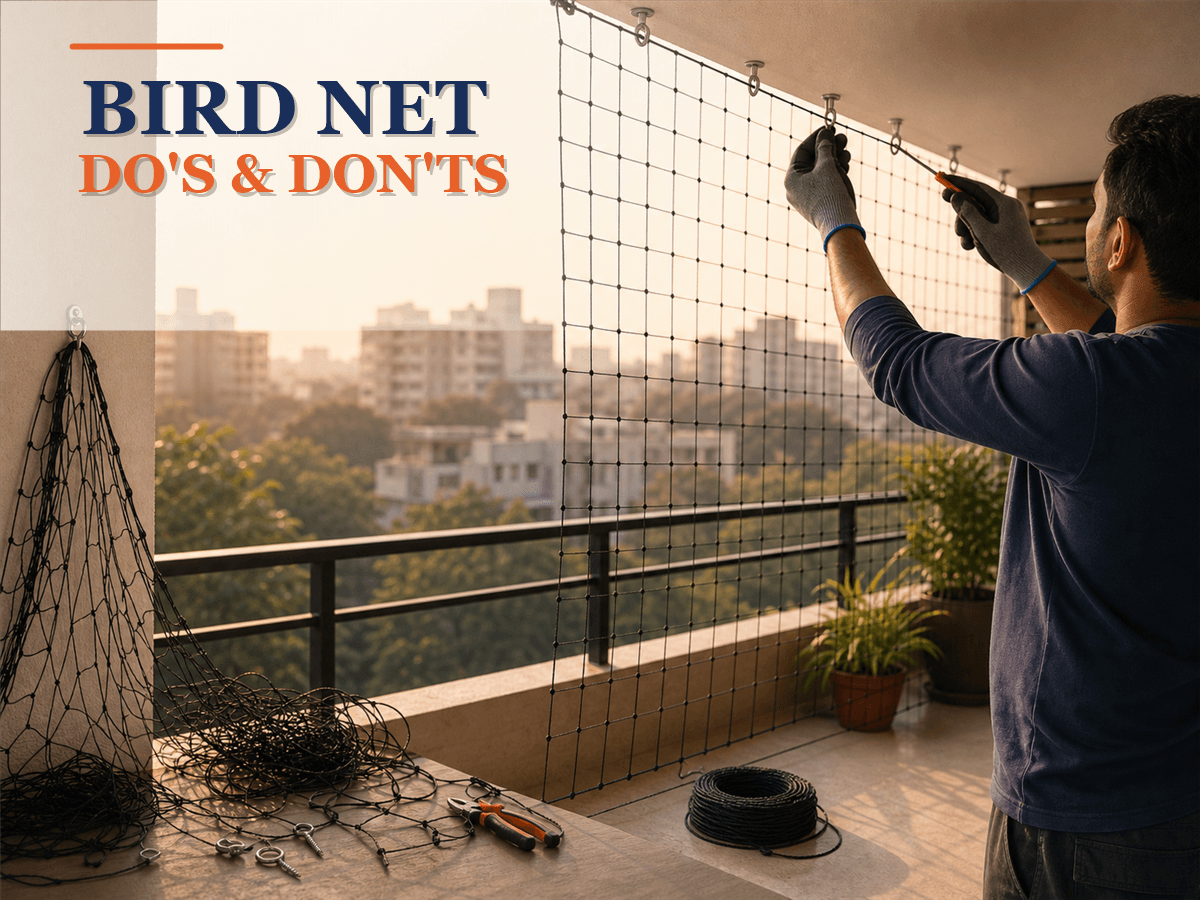
Proper installation is very important for bird netting. The net should be stretched evenly and fixed securely with suitable hooks, clips, screws, ropes, or cable ties.
Make sure there are no gaps around the corners or edges where birds can enter.
6. Secure Attachment
Some birds may repeatedly try to reach their nesting or sitting spots. That is why the net must be fixed strongly.
Use proper fixing points and secure the net well so birds cannot pull it down or enter through loose areas.
7. Regular Maintenance
Bird netting can be affected by weather, sunlight, dust, and movement over time. Inspect the net regularly for cuts, loose areas, sagging, or gaps.
Repair any damage quickly so the net continues to work properly.
Common Types of Bird Netting
HDPE bird netting is durable and suitable for outdoor use. It is commonly used in balconies, windows, terraces, and residential or commercial spaces.
Nylon bird netting is lightweight and flexible. It can be useful in spaces where a neat and lighter netting option is required.
Both options can be effective when the mesh size, material quality, and installation method are selected properly.
Installation Tips for Effective Bird Control
1. Measure the Area
Measure the area you want to cover, including height, width, and depth. Accurate measurement helps you choose the right net size and reduces wastage.
2. Use Appropriate Fasteners
Use proper fasteners such as screws, clips, hooks, ropes, or cable ties. The fasteners should match the surface and hold the net securely.
3. Avoid Sagging
Loose or sagging netting may leave gaps where birds can enter. Keep the net tight enough for proper coverage, but do not overstretch it.
4. Seal All Entry Points
Check all sides, corners, and edges after installation. Small gaps can allow birds to enter, so make sure every entry point is properly sealed.
5. Seek Professional Help if Needed
If the area is large, high, or difficult to access, professional installation is safer and more effective. Experts can install the net properly with the right tools and fixing method.
Maintenance Tips for Longevity
1. Regular Inspections
Check the net regularly for signs of wear, damage, sagging, or loose fixing points. Early detection makes repairs easier.
2. Repair Damaged Sections
If you find any cuts or holes, repair them quickly. This keeps the net effective and prevents birds from entering through damaged sections.
3. Clean the Netting
Over time, dust and dirt may collect on the net. Clean it gently with water when needed. Avoid harsh chemicals that may damage the material.
4. Monitor Weather Impact
After heavy wind, rain, or storms, check whether the net is still tight and properly fixed. If any part has loosened, tighten it immediately.
Conclusion
Installing bird or pigeon netting around your balcony or window is an effective way to prevent birds from entering, nesting, and leaving droppings around your home. By following the right dos and don’ts, choosing the correct mesh size, selecting durable material, and ensuring proper fixing, you can get better results from bird netting.
Regular maintenance and timely repair also help extend the life of the net. Whether you need Garware Bird Nets or ProNet Bird Nets, Netskart offers multiple options for balconies, windows, terraces, and other bird-protection needs.
With correct installation and proper maintenance, bird netting can be a long-term solution for keeping your home clean, hygienic, and comfortable.