 Whatsapp an Expert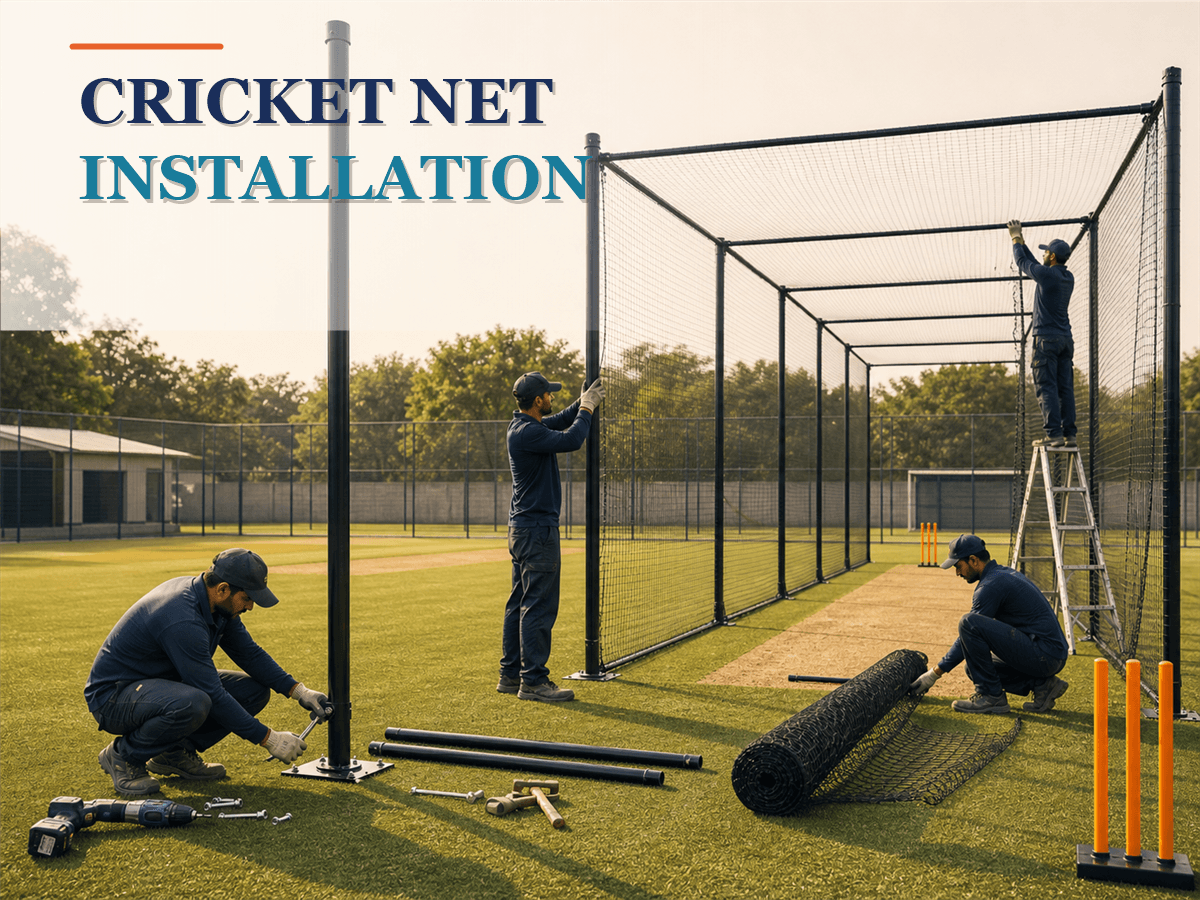
Cricket Net Installation Guide
Selecting the Location For Cricket Practice Net
Choosing the right location to install your cricket net is important for safety and proper practice. You need a space that is large enough for the net to fit comfortably, with enough extra room around it so players can move properly.
The area should be safe, with no dangers such as overhead power lines, nearby roads, sharp slopes, or weak flooring. A flat and open space is best. If possible, choose a grassy surface because it is softer and safer if someone falls. If grass is not available, make sure the floor is even and solid.
Also, consider the direction of sunlight during the day. Players should not face direct bright sunlight while batting or bowling because it can make it difficult to see the ball.
After selecting the space, if you already have a cricket net, you can start planning the installation. If you need to buy a cricket net, you can check Netskart’s cricket net collection and choose a standard or custom-size net according to your requirement.
Explore cricket nets here:
https://netskart.com/product-category/sports-net
Inspecting the Structure For Installing Cricket Practice Net
Before installing the cricket net, inspect the structure where the net will be fixed. The structure must be strong enough to hold the net properly because the net will take impact from cricket balls and may also face wind pressure.
Check the poles, walls, frames, or beams that will support the net. These should be strong, stable, and free from major cracks, rust, or damage.
If the structure is weak or damaged, repair it first or use a new support structure. A strong structure keeps the cricket net stable and makes the practice area safer.
Gathering Equipment and Materials
Before setting up your cricket net, gather all necessary equipment and materials.
Cricket Net: Make sure the net is the right size for the practice area.
Support Poles: Poles hold the net and should be strong enough for regular use.
Hooks or Brackets: These are used to attach the net to the structure.
Ropes or Cables: These help tie and stretch the net properly.
Tools: You may need a drill machine, hammer, wrench, screwdriver, measuring tape, scissors, and cutter.
Having all tools ready before starting makes installation easier and faster.
Assembling the Support Structure
If the selected area does not already have poles, beams, or frames, you will need to create a support structure.
If poles are being installed in the ground, they should be fixed strongly. This may require digging holes and using concrete or strong ground stakes so the poles do not shake or fall.
If the net will be attached to an existing wall or frame, make sure it is fixed securely with proper tools and attachments.
A strong support structure helps keep the cricket net safe and stable during practice.
Attaching Hooks or Brackets
Once the support structure is ready, attach hooks or brackets along the top section of the structure. These will hold the top edge of the cricket net.
Measure the top length of the structure and mark where each hook or bracket will go. Keep them at equal distance so the net stretches evenly and stays balanced.
Use screws or bolts to fix each hook or bracket tightly. They should be strong enough to hold the net during wind and ball impact.
Unrolling the Net
After fixing the hooks or brackets, carefully unroll the cricket net. Lay it flat on the ground first so it does not get tangled or damaged.
Then lift the net and place it against the support structure. Align the top edge of the net with the hooks or brackets.
Make sure the net is properly lined up before attaching it. This helps the net hang straight and cover the full practice area.
Attaching the Net
After placing the net against the structure, attach the top edge of the net to the hooks or brackets.
You can use zip ties, clips, ropes, or cords depending on the setup. Start from one end and move towards the other end, attaching the net at every fixing point.
As you attach the net, keep it evenly stretched. A tight and balanced net works better because it does not sag and can handle ball impact more effectively.
Useful cricket net options:
Securing the Bottom Edge
After attaching the top of the net, secure the bottom edge too. This stops the net from moving, flapping, or lifting during wind or ball impact.
If the net is installed on grass or soil, stakes can be used to hold the bottom edge. Push the stakes deep enough so they remain firm.
If the net is installed on concrete or a hard floor, use weights or other suitable fixing methods to hold the bottom edge in place.
A properly secured bottom edge keeps the cricket net stable and safer to use.
Testing the Installation
After installation, test the cricket net before using it. Gently push different parts of the net and check whether it stays stable.
If the net wobbles, shifts, or feels loose, check the hooks, brackets, stakes, ropes, and weights. Tighten any loose section before practice.
A properly installed cricket net should stay firm when balls hit it and should not come loose easily.
Inspecting for Safety
Before using the cricket net, inspect the full setup for safety.
Check for sharp edges on hooks, poles, brackets, or screws.
Cover sharp parts with tape or soft padding if needed.
Tighten loose bolts, hooks, ropes, and clips.
Make sure the practice area is clear of tools, wires, stones, or other obstacles.
A safe setup allows players to practise without unnecessary risk.
Finalizing
Once the cricket net is safely installed, make the area neat and ready for practice.
Trim any extra netting carefully with scissors or a cutter.
Remove unused tools, leftover materials, and waste from the area.
Check the full net again to make sure it is evenly stretched and properly fixed.
This final step makes the cricket practice area clean, safe, and ready to use.
Regular Maintenance
To keep your cricket net in good condition, inspect it regularly. Over time, the net and support structure may show wear because of regular use, weather, and ball impact.
Every few weeks, check the net for holes, tears, loose sections, or weak points. Also check poles, hooks, ropes, brackets, and bottom supports.
If you find damage, repair it quickly. This helps prevent bigger problems and keeps the practice area safe.
Choosing the Right Cricket Net
The right cricket net depends on where it will be installed and how frequently it will be used. Netskart offers HDPE cricket nets in common thickness options such as 1.5mm, 2mm, 2.5mm, and 3mm.
The commonly used cricket net mesh size is 50mm, and 45mm is also available depending on requirement. Netskart deals in Garware and ProNet cricket nets, with custom sizes available on request and Pan India delivery.
Conclusion
Installing a cricket net properly is very important for creating a safe and useful cricket practice area. Start by choosing the right location, checking the support structure, gathering tools, fixing hooks, attaching the net, securing the bottom edge, and testing the setup.
Regular maintenance is also important. Checking the net, repairing small damage, and keeping the area clean helps the cricket net last longer and perform better.
A well-installed cricket net gives players a safe, reliable, and focused space to practise batting and bowling. With the right cricket net from Netskart, your practice area can become more effective, organised, and long-lasting.